When we think of the future, we always have the tendency to consider what will improve in our lives and the world. However, when you think about it, there are many things that we take for granted today that are not likely to improve in the future. Today we’re going to share with you ten things that are better today than they’ll be in the future.
1. Cost of Living
As a result of the recent pandemic, it’s almost certain that taxes around the world will continue to increase. Our cost of living rises year after year, and this is one area that’s highly unlikely to be better in the future. Make the most of the lower cost of living and invest well now to set yourself up for the years ahead.
2. The Weather
Over the past decade, we’ve all become aware of the impact of climate change on our world. As the air temperature rises, expect more rainfall around the world, which may also be more intense. Changes in wind patterns may result in more natural disasters and damage to the world around us.
3. Privacy
As we all spend more and more of our lives online today, whether that’s for personal or work reasons, concerns surrounding privacy are continuing to increase. Expect data to be more readily available in the future, so be careful with your digital reputation starting now.
4. The Natural Environment
Working hand-in-hand with the weather and climate change, it’s likely that our natural environment will change dramatically in the upcoming years. Expect beautiful destinations in the world to no longer exist and overcrowding to destroy some of the more deserted travel destinations.
5. Cheaper Outsourcing
If you use outsourcing within your business currently, this is likely to increase in price in the future. Individuals around the world are noticing the benefits of working online and freelancing, which begins to push up the price of outsourcing.
6. Opportunities to Live Overseas Cheaply
Whether you already travel overseas regularly or are hoping to take advantage of working from home in the future, now is the time to travel. With more people working remotely, this will begin to push the cost of living and renting an apartment in popular digital nomad locations such as Medellin and Tbilisi much higher in upcoming years.
7. Work-life Balance
The last year has been a struggle for many of us as far as work-life balance. With the increasing reliance on technology for our jobs, this is likely to only get worse. Companies are expecting employees to be plugged in 24 hours a day, which will take its toll on our mental and physical health.
8. Investing Opportunities
People are slowly beginning to understand the benefits of investing, which is increasing the number of advertisements for this around the world. Investing is likely to become far more competitive and less lucrative in the future due to the increase in its popularity.
9. Ease of Relocating
Relocating today, whether within your home country or further abroad, can be reasonably simple, depending on your situation. With challenges such as Brexit and the tightening of immigration laws around the world, this freedom of movement is likely to be reduced in the future.
10. Launching a New Business
With so many individuals finding themselves unemployed last year, people have taken this free time to launch new businesses. Depending on the industry you are planning to launch into, now is the best time to consider your next business venture. With hundreds of businesses launching each day, it’s only becoming more challenging to stand out from your competitors.
We hope these ten things that are better today than they will be in the future have given you something to think about. What do you think is better today than it will be tomorrow? It’s certainly an interesting topic to consider and one that can help us make the most of the present-day and appreciate everything we have at this moment in time.
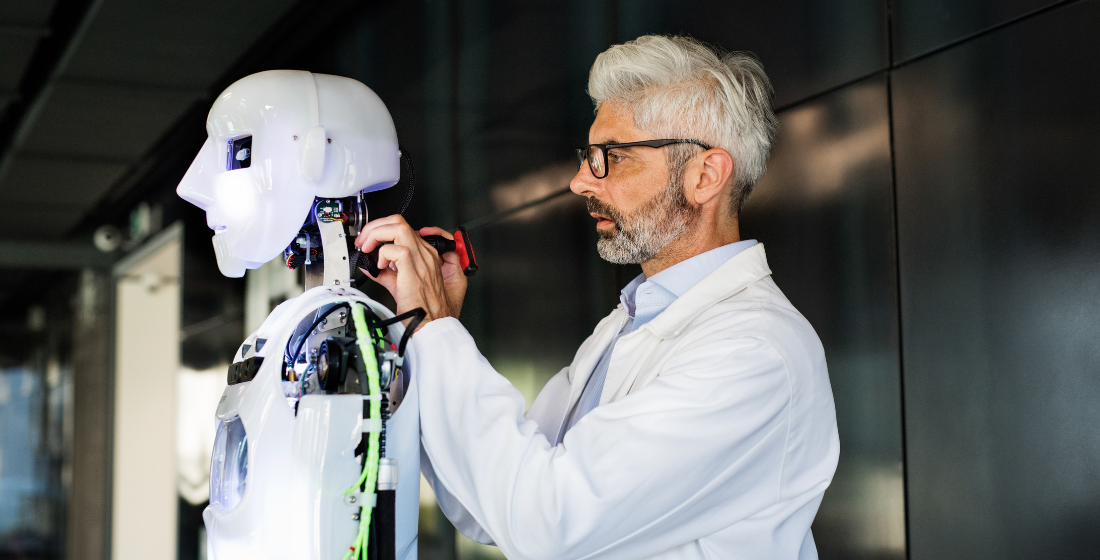
We are rapidly heading towards a digital-first world, and this exciting time of robots, artificial intelligence, and remote work is about to change the way we live entirely. Let’s take a look at 10 incredible things about to improve life in the next 10 years.
5 Ways Robots Will Improve Quality Of Life
1: Healthcare is undergoing remarkable development thanks to robots. Removing human error from complex and risky operations, robotic arms provide a higher quality of healthcare for those most vulnerable in society. As technology improves and develops over time, we may see robots taking over many minor operations too, and perhaps moving into dentistry.
2: Not only are robots, artificial intelligence, and automation improving the healthcare industry worldwide, but robotics are also being designed to care for an aging population around the world. Providing companionship, our new digital-first world will roll out robots into care homes to ease stress, anxiety, and loneliness.
3: Another way our lives will be improved in the next 10 years is through the introduction of self-driving vehicles. Robots on the road will significantly reduce the number of road traffic accidents by removing drink driving incidents, collisions due to distracted drivers, and crashes caused by medical emergencies behind the wheel, just to name a few.
4: Robots will also be taking on risky jobs that humans currently do, such as working in nuclear power plants, search and rescue and bomb disposal. So, step aside when it comes to high-risk work environments and let robots help safeguard mankind.
5: Humans are naturally creative, but when daily chores and work fill up our time, creativity is put on the back burner. Robots will soon be gifting us all valuable time by optimizing daily tasks and allowing us to develop our imagination and have more time to be creative.
5 Ways Daily Life Will Be Different
1: If the global pandemic has taught us anything, it’s how accepting many industries now are of remote work. In order to evolve and take advantage of talent around the world, remote work must become our new norm. Thanks to technology and high-speed internet, remote work is here to stay!
2: In a digital-first world, there will no longer be a need to go to the supermarket and pick up groceries. Your fridge will store your groceries’ database and provide an accurate grocery list when you need to restock. It will then send an order request to your supermarket of choice, and an autonomous vehicle will deliver your goods. The technology is already available to make this a reality; we just need to implement it within our homes.
3: Thanks to the internet, education is limitless, with a vast amount of educational content widely available online for free. In the next 10 years, education, especially higher education, will likely be taught entirely online, allowing people to travel and study simultaneously. This will also complement a rise in remote work!
4: Digital currencies are set to replace coins and notes, reducing the need to carry cash in the next couple of years. In fact, China has already made the switch to digital currency by introducing the cyber yuan, which tracks spending in real-time. It’s expected that more countries will follow suit over the next 10 years.
5: Diet is set to change significantly over the next decade, as more people move towards a plant-based diet or become 100% vegan. With more time on our hands, thanks to technology improving daily life, more people will spend time improving their health and diet, including growing their own food and foraging rather than visiting the supermarket and living a more sustainable, eco-friendly lifestyle.
The entire world is ready for the coronavirus to be over. After spending more than a year in isolation and financial hardship, people want to live their lives again. One of the things that everyone wants to do the most is travel.
The airlines and hotels have already reopened. However, it still doesn’t feel like things are back to normal. There are still mask-wearing requirements in almost every public setting in the world. And when you travel to another state or country, you’re still required to remain in quarantine for an X number of days.
What will travel be like after all the restrictions get lifted? Will the travel industry recover? We predict they will! Below are the top 6 groups that will be radically better for travel after the coronavirus.
1) Location Independent Workers
Traditional freelancers and artists have been stuck at home for the past year with nothing to do and no way to earn a living. That is one of the downfalls of being a location independent worker in the middle of a pandemic.
The good news is that location independent workers will soon travel again for jobs and inspiration. The post-coronavirus world will have an influx of independent workers getting on airplanes and travelling to other cities and countries to thrive in their self-made professions.
2) Digital Nomads
Most digital nomads have been able to survive the pandemic because they make their living on the computer. However, all their communications with clients have been through telephone or video conference calls. No one has met in person since March 2020.
Digital nomads already spend enough time on the computer alone. They are starved for physical human contact and interactions. That is why you’ll start to see more digital nomads travelling to different cities and meeting with clients in person. Even if in-person meetups are unnecessary, the digital nomads will insist for the sake of being around people.
3) Tourism
The coronavirus destroyed the tourism industry in 2020. When airlines and hotels began to reopen, people were still hesitant to travel. Their worries of the coronavirus spread persisted. But that is bound to change because of the vaccine distribution efforts already underway. Once enough people get vaccinated, they’ll have more confidence to travel again.
International tourism should pick up significantly over the next year. All the stakeholders associated with the travel and tourism industries will do much better in the coming years, including the cruise industry. Major cruise lines are already selling out their cruise packages for the summer and fall seasons. Reservations at hotels throughout the country are getting booked well in advance.
The tourism resurgence will create and restore tourism jobs. People will stop their financial dependency on the government and go back to earning money for themselves. If people earn the kind of money they were making before the pandemic, it will motivate them to travel and take trips more.
4) Business Travel
Business travel has been non-existent during the coronavirus. Pretty much every professional person has relied on Zoom or Cisco WebEx video calls to conduct and attend virtual business meetings. But there is only so much that can be discussed and presented through a video chatting platform.
Company executives and managers are anxious to attend in-person business meetings again. Most company leaders don’t like to make deals or final decisions without looking at their employees or clients in the eyes directly. So, they will be travelling quite a bit on first-class commercial airplanes or private jets to have these in-person meetings.
5) Holidaymakers
By the end of 2021, holidaymakers will reunite with their families. They will fly or drive cross country to be with them after a year of separation. Some families will even go on vacations to Hawaii, Greece, Italy, and other exotic destinations they’ve dreamt about for a long time now.
It doesn’t matter if it’s the holiday season or not. People will use whatever vacation time they have left at their jobs to create holiday time for themselves and their families.
6) Nationwide In-Person Meetings
Hotels and conference centres had refused to host business meetings because of the social distancing restrictions. Once those restrictions get lifted, nationwide in-person meetings will come back in a big way.
It was always normal for major company representatives to travel to different states for meetings and presentations. A lift on the travel restrictions means that nationwide in-person meetings will grow exponentially.
Final Words
The future looks very bright for travel in a post-coronavirus world. Businesses can thrive, and families can spend more time together. More people will be employed, which means they’ll have more money to travel.
The only downside is that travel insurance costs will rise. When the pandemic first struck in March 2020, many travellers got stranded on cruise ships and unfamiliar towns and cities. Those without travel insurance policies lost out on the money they invested in their travel itineraries at the time.
Travel insurance companies still received thousands of claims from people with travel insurance policies. For this reason, you can expect travel insurance costs to rise in 2021 and the years to come. Travel companies want to prepare in case another pandemic ever strikes their industry again.
Genomics refers to the study of the human genome, therapeutics refers to the treatment of diseases that is based on the administration of medicines that aim at reducing these diseases or preventing them from occurring altogether while longevity refers to the lifespan a person has before their demise.
There is a correlation between the three with concepts regarding the human genome being used to produce drugs that target various stages of the genetic cycle and ensuring that life is prolonged amongst people suffering from fatal diseases. In the past, genomic studies have been used in research projects that enabled the discovery of drugs and synthetic manufacture of some such as insulin that has enabled the treatment of people suffering from diabetes mellitus (Mandal, 2019). Synthetic insulin has been crucial in prolonging the lives of diabetics and bettering their health conditions.
This paper pays close attention to genomics, its use in therapeutics, and its influence on longevity in the future. We strongly believe that the fast adoption of Genomics and accessibility to testings will make genomics testing the new normal in the future to clinical disease diagnosis and prognosis.
In the recent past, human beings have begun viewing aging as a disease (Diam, 2020). They have shifted from the past view of this phenomenon as an inevitable natural condition that cannot be evaded.
There have been significant efforts by genomic scientists to understand this phenomenon and perhaps enable them to reverse it. Huge support has emerged for proponents of such ideas who have received enormous financial and resource funding to enable them to carry out their work efficiently (Green et al., 2020).
Scientists advocating for this view have carried out gene sequencing studies to understand the role of genes and human DNA in the aging process. These scientists recon that should they find the genes involved in aging, they can develop medicines that harbor the actions of these genes, ensuring that the body continues to thrive, evading the destruction phenomenon of aging that climaxes at death (TMF, 2020).
A breakthrough is surely on the horizon for these scientists. In a few years, scientists will discover the genes responsible for aging. They will develop appropriate sequencing measures that will enable them to manufacture drugs that arrest the aging genes. Arresting the actions of the genes responsible for aging will ensure this phenomenon is kept at bay and people do not age, preventing death. Longevity in life will also be achieved.
The current state of relating genomics to longevity looks promising. Glycan tests are becoming ever more available, accessible and accurate. These tests can play a vital part in determining people’s biological age over their chronological age.
The impact of various diseases on the human body genes has been given proposed as a reason for aging. These diseases significantly harm the human genome interfering with various genes.
The affected genes act as triggers for the cells to slow down the replication process. Decreased replacement of worn-out cells as a result of decreased genetic stimulation leads to saturation of the body with old cells(Franck, 2019). The phenomenon of aging is therefore well and truly underway.
Genomics aims at providing preventive medicines that target the genes that are responsible for slowing down cell replication after infection. Others seek to provide prevention medicines that prevent almost all diseases from occurring in the first place, rendering the planet disease-free. This initiative is bound to ensure the rate of cell replication remains constant throughout life (Chinese Academy of Sciences, 2021). Such efforts are bound to contribute to longevity. With the triggers to reduced cell division reduced and the switches eliminated, longevity is bound to be achieved and the human is bound to live longer.
This will ensure that humans have more control over the lives they lead and how their lives come to a halt. This is only possible if genomics continues advancing at the current or faster rate.
Diseases such as cancer have been the hallmark of global medicine for a while now. Cancer is caused by the rapid and uncontrollable division of abnormal cells of the body. These compete with the normal cells for oxygen and nutrients. When the normal cells are starved of the requirements, they become weak and die. This is how cancer leads to death. Cancer also has a high mortality rate wiping out huge chunks of the global population (Baer, 2020).
Cancers occur due to a glitch in the cell division cycle. This is potentially an error in the instructing of the body. This error occurs in the genomic sectors of the body. Genomics targets to identify the glitches that occur in the genes during each cancer and come up with specific medicine that deals with that error in the genome. In a few years, genomics will be capable of producing drugs for each cancer that tackle the errors occurring in the cell division machinery (Modern Healthcare, 2019).
These drugs will aid with the eradication of these cancers in their entirety. Elimination will boost lifespan and ensure longevity, aiding in the achievement of this human vision.
In conclusion, the genome project is the future of healthcare and medicine worldwide. There have been tremendous steps made in ensuring that the genome is understood adequately and appropriate inventions made along that line.
The ones mentioned are sufficient examples of what human ingenuity coupled with immaculate resilience has been able to achieve. There is a need for more focus to be lent to the study of genes in detail and the development of drugs from these studies to tackle various diseases.
This support should be in the form of sufficient budgetary allocation by various institutions. Resources should also be set aside in the form of personnel and infrastructure to enable the achievement of this noble initiative. There is also a need to ensure that people are availed with this information to ensure their optimist and participation.
Green, E. D., Gunter, C., Biesecker, L. G., Di Francesco, V., Easter, C. L., Feingold, E. A., Felsenfeld, A. L., Kaufman, D. J., Ostrander, E. A., Pavan, W. J., Phillippy, A. M., Wise, A. L., Dayal, J. G., Kish, B. J., Mandich, A., Wellington, C. R., Wetterstrand, K. A., Bates, S. A., Leja, D., & Vasquez, S. (2020). Strategic vision for improving human health at The Forefront of Genomics. Nature, 586(7831), 683–692. https://doi.org/10.1038/s41586-020-2817-4
Medicine is the craft, research, and experience of caring for a patient and handling their illness or disease’s diagnosis, prognosis, prevention, recovery, and palliation. Healthcare has now reached the next period of exponential advances, considering the fact that we are just two decades into the twenty-first century. Individual genetic vulnerabilities to chronic and lethal illnesses will now be detected using precision medicine technology, possibly eliminating illness decades later.
Precision medicine, digital therapeutics, 3D printing, immunotherapy, gene and stem cell therapies, and artificial intelligence are among the new technologies and treatments that have arrived or are on their way. People are living longer and happier lives thanks to modern medicine. Researchers, on the other hand, intend to take wellness changes even further. The future of medicine is promising, thanks to developments in genome editing, technologies to cure blindness, and attempts to address high medication prices.
Modern medicine has greatly improved people’s health. Researchers now want to take this a step further. People are living longer and happier lives than their forefathers and mothers. But, as any medical researcher can testify, dreams are even bigger. With too much money to be made, disease prevention is becoming increasingly important in medicine. Intervention to protect people from long-term illness may start as soon as the baby is born. And, although a deterioration in health in later life of be common, the line between stable ageing and disease is still a point of contention.
Efforts to gain more leverage over rogue immune systems, as well as to create technical alternatives to paralysis, are showing early signs of success.
The future in medicine may be very promising indeed if obstacles to obtaining the latest therapies available can be resolved.
I’ve been a professional programmer for 7 years. I’m now an Engineering Manager at a billion-dollar company working on a video streaming platform with millions of unique views per month. I also manage web’s BODGroups implementation, which is like Facebook Groups for coaches, and I manage a team of 2 leads and 19 engineers. How did I get here so fast?
This post is my own and may not represent the postings, strategies, or opinions of my employer.
Pre-professional
I started building websites in high school (around 1996) on AOL. I searched out new things I could build in HTML or new cgi scripts I could add. JavaScript existed but the use was trivial: generating trailing mouse pointers or similar. I then spent six years in the military not coding. I was unhappy so when my enlistment finished I went to college.
I graduated from the University of Redlands in 2009 with a Bachelor of Science in Computer Science. I grabbed solo time with my professors to learn about PHP and MySQL and Apache so I knew the basics of getting a full-stack site together. At Pepperdine University School of Law I became a fellow at the Palmer Center for Entrepreneurship and the Law which set me up to better understand startups. While I was in law school I worked for a solo lawyer and hated the job, immediately realizing I didn’t want to do it as a career. For a time most interviewers for programming jobs thought I was overqualified to be a programmer and passed on me so I now remove my law degree from my resume and reassure anyone that notices it on LinkedIn that I don’t want to be a lawyer. I love programming and finally found what I want to do with the rest of my life!
Starting Out
My first job was as a web developer at a small agency in Santa Monica. The work focused on HTML, CSS, and Photoshop. I dabbled in CakePHP and looked at Ruby on Rails as well, but did nothing compelling with them.
Shortly one of my law school professors saw that I was working as a programmer and hired me to work at his startup with a life-changing pay raise. The product had a complex API layer that could analyze legal documents. I worked on a CakePHP application that was a view layer to expose that API functionality. We attracted the attention of Bloomberg who acquired the company and put us on contract to integrate our API with their platform. Bloomberg threw away the CakePHP application because they used Ruby on Rails. Their developers built a gem consuming our API layer and I rebuilt the front-end to integrate with the gem. I felt over my head working on an unfamiliar platform for a major corporation but it looked and worked correct in the end.
Touching Scale
On completion I moved on to a lead generation company. I worked on an MVC PHP application that could serve theoretically infinite websites based on the used domain. While I was there we grew from 12 domains to over 50 and I learned a lot about scale. It was an A|B testing framework for finding the best lead funnel templates with the leads sold to interested third parties in real-time. While I worked full-stack I managed a 3-man front-end team that built out hundreds of templates for the A|B tests. I empowered my team to use different frameworks and experimental technologies. Even though the company was making a lot of money I didn’t feel I was being fairly compensated so I left after about 16 months when I found a job on Craigslist that gave me a five-figure raise.
Personal Development
Even though my job at the lead generation company wasn’t using Rails I had continued to use it for my side projects. I leveraged that into a job working in Rails on a platform to help non-profits raise money. I learned even more about working at scale and a lot about good software engineering. I worked full stack but am focusing on my front-end experience for this article. The web app was a Rails server-rendered front-end, but used CoffeeScript, jQuery, and vanilla JavaScript. I started learning React on my own because I felt I needed another tool in my belt. I started a developer group focused on “Design Patterns: Elements of Reusable Object-Oriented Software” to learn architecture. When the time came for a pay raise the offer was less than market salary for the skills I possessed.
At that point I joined an early-stage startup that helped consumers get started with impact investing. The Rails back-end talked to both its own database and third-party APIs and the front-end was built with React and Redux. I got a lot of great experience working on every layer of a feature from back to front. We had high standards and strong engineering principles were paramount in every PR. It was a very collaborative environment with the whole team grooming and pointing stories, interviewing potential new talent, and pair programming regularly. I loved working there but the business bungled an acquisition opportunity. A handful of other companies built competing products and the financial backers decided to shut down.
Current Role
From there I moved on to Beachbody. I started as an Engineering Lead over 3 senior engineers working on a WordPress site with a React front-end and a Java API. I don’t know much Java but I learned what I needed as I went. The product was not getting traction and the company stripped its functionality. The team’s contract expired and was not renewed so I was (and still am) the only engineer left to manage it in “maintenance mode.”
I accepted the opportunity to move to the beachbodyondemand.com front-end team’s React codebase as a Lead Engineer. We launched BODGroups this year, which is a facebook-like experience for our coaches. We also launched an internationalization project that uses AppSync to consume data from a CMS and expose it to our web app. I’ve learned a lot about front-end architecture and GraphQL here. Both initiatives were very successful and Beachbody promoted me to Engineering Manager. I have 2 Lead Engineers under me and a team of 19 senior engineers. And that’s how I got to where I am.
Reflection
Even though this reads like 15 years of experience this is my resume from May 2013 until November 2020, 7 years. I switched jobs often but more than tripled my salary (I started at $50k) and worked with more technologies than people with twice as much longevity. Few companies promote from within or pay comparable raises to what you can get on the open market so it pays to continue expanding your skillset and be willing to step into that next role. Keep learning and go for it. If you stay in the same position for too long you are likely not earning what you are worth.
Advice
Switching jobs in this career field is never fast. Generally it takes me about 3 months of searching and interviewing to find a new job. To find those jobs I reach out to recruiters I’ve worked with in the past on LinkedIn. I accept every recruiter’s connection that reaches out to me. I apply to companies that interested me in past job hunts. I search Craigslist. I look at jobs posted on StackOverflow. And I traverse every other avenue I can think of to find opportunities.
I apply for 3-8 jobs every few days and am ignored by most companies when I submit applications. I receive so many more rejections than offers. That’s normal, and it’s okay. When a company says no you have to think of that as you not being the exact right fit for that company at that moment in time. It might be the team mix, a skill you didn’t convey that you have, or the interviewer might have had a bad morning. You have no real idea what they were looking for, and they have no real idea of what your capabilities are. It’s not a fair or healthy evaluation system, and you have to let it go that you didn’t connect with an interviewer. It’s fine, keep applying to more places and you’ll find the right place for you at that point in your career.
Final Thoughts
That’s my developer journey so far, I hope it was interesting to read for you. It’s been interesting to live and experience, and I still have a long way to go! CHappy to chat about anything, or if you want me to write more details on any topic let me know. Hopefully, soon we’ll get to work on a project together and build something awesome!
(Note: For anyone who is worrying about what to do regarding Coronavirus in the United States, I urge you to visit: https://www.cdc.gov/coronavirus/2019-ncov/index.html). If you are outside the US, feel free to consult your country’s Coronavirus guidelines. If you have Coronavirus, please consult your doctor for advice. I do not offer any sort of medical advice/legal; information posted here is purely opinion and not representative of my team or JavaScriptLA and sponsors. That all out of the way, back to the blog post:
What does coding have to do with Coronavirus? I guess I’ll explain my thoughts.
First off, just writing more so to blog on the current events that are happening right now. Despite the fact that this group is more so about JavaScript and programming, I think as a community leader, it’s also important to blog on major event that impacts everyone part of this group.
I am like you all, just watching the situation unfold. I don’t know necessarily how all this will play out, but I think it’s best everyone try to remain as calm and vigilant as possible.
Just like in programming, when you find an error — you are expected to think out all the steps logically that produced it, and then try to go through each step until you find the path that went wrong and ultimately correct it. I believe that same kind of thinking will help you survive this pandemic.
You can solve problems best in computer programming by being calm and collected. It’s definitely easy to get frustrated at the computer when things go wrong and curse the machine for making your life miserable. But to me, getting mad and cursing don’t really help — ultimately after your entire tirade, the problem is still there, still waiting for you to come to your senses and solve it. As I’ve mentioned before (when I was learning to program in my previous post), through experience, problems don’t care about your feelings.
Have you ever played any survival type video game? Have you noticed that the main character is usually calm and collected? No matter how gory the situation gets, the main character MUST go on. I was playing Call of Duty World War II the other day, and the first scene is a re-enactment of D-Day. You and your comrades in battle are on your way to fight the Germans in the Battle of Normandy, only to suddenly have half your team killed before even reaching shore. As you look at your friends now dead, some of them limbless, your commander instructs you that you MUST follow the mission and get to the wall, so you can help the others take down the barriers to fight the Germans.
In seeing that re-enactment, I thought, wow, if that was me– how would I react? Especially if I was with all my friends and saw them die one by one? It’s so impressive that these people who fought these wars carried on, and WON the war.
War is hell for sure, and I’m not advocating it at all. I’m not even suggesting that we have one nor try to start preparing for one. But that said, it’s VERY naive to think you can just be at peace at all times. You must train yourself to be a rationale thinker at the very least, no matter how crazy you feel emotionally in your head.
So that leads me to my next point of discussion, which is to use your brain as best as possible. Though people are panicking around you and clearing out grocery stores, you must look at even that as a potential “bug”.
If you saw your computer having a kernel panic, how would you react to it? Most of you would just restart the machine. However, if you look closer sometimes you can read the error that caused the kernel panic in the diagnostic report; and find that it was a singular program causing the bad behavior. If you stop that program, the computer resumes to normal. Maybe it’s not that simple, perhaps it’s something worse; but the process remains the same, you’d just look through all your logs until you find the offending bug and then stop it.
Applying this to people clearing out grocery stores, stop and think. What happens if you add to the panic? Well, lol, you’re going to cause others to also panic around you. Suppose you also start clearing out grocery stores and then post pictures to social media. Others will see that and start doing what you did, and hence you have people standing in a line outside Costco that stretches 1/4 of a mile long (JUST TO GET IN).
When are stores that sell TP, hand sanitizers, etc going to limit the number of those items purchased per person? Or is that happening already? These hoarder types are making things MUCH worse. Please think of others and be kind during this trying time.
What if you choose not to panic buy, but only buy what you need?What if you choose not to post to social media? Well you are one less person adding to the hysteria, and perhaps your circle of friends on social media will feel bored there aren’t enough pandemic posts, log off and go back to living their lives regularly.
Just like in an algorithm, things can be exponential, factorial, linear, constant, etc depending on how we “program” (set) our lives. If you act in ways that affect your surroundings in a way that causes exponential danger, you ARE THE BUG. Stop yourself, and think.
Programs can be factorial, exponential, linear, logarithmic, constant, etc. (Stack Overflow)
It also helps to think rationally about the information you consume on the internet (as well in real life). Suppose you see a video of people dying in the streets, with blood coming out of their lungs? Suppose you see crows flying everywhere in the sky, looking like a plot out of a bad Hollywood B horror movie? Suppose some guy on your favorite Youtube channel told you that you need to start buying more guns and supplies, and be ready to take down your neighbors lest they might try to kill you. How would you react? Do you react with terror? If you did, how would that affect your “world” around you?
Are you starting to get the picture here? Does this all make sense?
My point is — you ARE very much in control of your own LIFE program (despite what others might tell you or want you to believe — fear is a great way to sell; so recognize that). To me, as a coder especially, you are gifted with tools and a way of thinking that works already for the computer world and would work GREAT for your real world when applied. Use your developer tools to help you debug your life better; and you will live better. Adjust the way you consume information too; just like a computer needs a good program, you need good information to help you make better decisions. If you don’t have it, start finding ways to have it in your life. Then help others as well.
But, Vijay, you’re not panicking enough! The virus is coming and already killed 1000s of people!
Again, where? Who? What can you do about it? Think?
Suppose you are right in your panic, and I should be more riled up. Everyone is dying around you, and I notice my neighbors are also coughing up blood. Do we die too? Perhaps nothing can save us.
***** END SPOILER ****
Okay, if you read this far, I’m assuming you saw the clip and / or don’t care about spoilers.
So yeah, my point is that you have to remain vigilant even in the face of death. You can’t just give up and die. What will you do if you have family? What kind of legacy will you leave for them? Would it be better to die or use your brain in a way that can save others? Again, imagine what would our society be like today if people who fought in wars just gave up?
My point here is that just because a situation is bad doesn’t mean it’s the end of the world. Again, think logically, rationally, and of course ethically. You still have time– how much time do you have before you die? Unknown, no matter if a virus exists or not.
So do something with your time now — to me I see this pandemic as a chance to really THINK properly about your life and how you want to spend it. Will you contribute something of value?
Plenty of people are without food/water right now. How can you use your brain to help them? How can you you use your coding skills? Can you hack to help? Can you contribute to an open source project to help others? What if you are still a junior, and barely know how to code “Hello World”? Can you still help? Sure — maybe help someone else more senior by taking on the coding that feels monotonous to them — aka CSS/HTML.
Help your family member learn math/algorithms so they can act in ways that don’t exponentially make the world around them WORSE. Even if you are a junior, you can still control how you digest information coming in from the web / media around you. You can still help find BETTER information for those who need it. You don’t need to know JavaScript to do that.
You can also exercise compassion towards others. Together as a society, UNITED, we can overcome a lot more than every man, woman, child for themselves. So use that sort of thinking to help you and your own family solve much more complicated problems. If we all start acting selfish, we will only cause more problems that lead to more exponential like disasters. In fact, part of what you are seeing now in the media is exacerbated by media and bad actors who want to profit. Why doesn’t anyone report good news? Because — it doesn’t sell. If you exercise compassion, things get boring and people go back to living their very normal lives without fear. Isn’t that a great thing? Don’t you want to have normalcy in your life, so you can focus on things that matter instead — like enjoying programming, hanging out with family/friends, having fun, going and visiting cool places?
Doesn’t it suck that airports around the world have closed down, and people are less trusting of each other? Doesn’t it suck that we can’t go outside and enjoy the good things we used to a few months back without concern? Would decisions you make from now forward be to better society or will you just keep making decisions that harm yourself and others?
Hmm Vijay, if I start helping others — would that benefit me? Would my peers/family members respect me more, perhaps remember that I helped them out in times of a crisis? I think you know the answer.
Would that old lady in the Costco line feel a little more safe/trustful of people if I helped her also have toilet paper instead of hoarding it for myself?
My dad and I pulled into Costco and we saw a little old lady trying to put her groceries up in a truck, and my dad stopped to help her😍☺
If I made some kind of program/video that helped people learn how to better take care of themselves while isolated, would that help society?
Check out this website, made by Avi Schiffman (a high schooler) that gives live updates on Coronavirus and how people can protect themselves. Pretty cool. What could you also contribute?
“You are the change you want to see in the world” — Ghandi.
Program the change you want to see in your world :). We’ll be here with you doing exactly that, even if Coronavirus slows down our meets in person, we’ll still be online.
Hi all, time for another blog post! I am working my way to make blogs a more regular thing for myself.
So today I want to share my story with you all, as well as what it feels like to be a developer in 2020 (after almost 10 years of programming).
I’ve been programming since 2011. I started off doing websites on WordPress, so my earliest days of learning to code were mainly spent inside a Barnes N Noble (or Borders back then), thumbing through pages of PHP. At that time, I really felt like I was reading an alien language, and there weren’t any sophisticated YouTube or Udemy tutorials to help me out. So learning just took a long and drawn out amount of time. I spent a lot of my days in cafe lounges next to bookshops reading and practicing out examples for hours upon hours. I freelanced mostly to just get by (but being single I also didn’t have huge expenses — I literally just needed a couch to sleep on and a computer, and I could use a shoe-string budget to eat daily). I saw many people doing programming at that time getting paid serious money; many of who were self taught, so I figured if I just kept the focus, the money would follow for me too.
Around that time also, I found out about meetups — and I thought they were really cool, so I decided to try posting some for JavaScript on Meetup.com. I wasn’t sure who would “meetup” with me, but I guess that’s the fun using the website, right?
The first few meetups went well, but even from the beginning I sort of felt like there were a lot of people who were just as confused about learning JavaScript as I was. If I advertised for a meetup on a specific topic, it was pretty much on me to lead the discussion — or it would go nowhere.
I remember a time where I was reading quite a lot about JavaScript Regular Expressions, and I went full blown “college presentation” style that day I gave the meetup. To my surprise, many people liked the presentation and thought I should give more talks. So I did, and my confidence began to rise. Still, I knew I was still just a confused programmer and to make this group worth my while, I needed support from more senior level programmers.
During those beginning days — if I wanted a talented speaker to come drop by our group to give a JavaScript talk; I’d often hear that I’d have to “fly them out and pay them”. I also remember asking some of my childhood friends who went on to work at companies like Google / Amazon and they’d just show disinterest. One “friend” told me that I’d have to pay him $100/hour since he doesn’t do anything for free anymore, and even though we were friends, he didn’t want to hang out with people so “basic”, it would bring him down.
I also got ignored quite a lot by people I’d reach out to, despite writing really great introductory letters. I remember going to other meetups around the area, then trying to talk to the developers there, and they’d get annoyed that someone like “me” had been let in. It was not fun– I felt like other meetups in the area just weren’t as fun to attend. I was “an impostor” to these senior developers, but a leader of the “blind” to my fellow confused meetup pals. So I just continued to do “JavaScriptLA” instead of join some other meetup and be someone lost in a crowd. To me, this was more educational than sitting in an auditorium with a lot of other developers sizing each other up.
So I continued to keep reading and then presenting/leading each month for JavaScriptLA. It cost me nothing and it was fun. I was always afraid someone would call me out on my lack of knowledge on the subject matter and then chew me out publicly (like a visiting senior developer), but that never happened. The worst response I’d ever get was “Hey I think that’s wrong”, and then I’d ask them to add to the discussion. So I was able to avoid “being the teacher” and instead just the “facilitator”.
Thus, meetups carried on and over time I started getting more people showing up — word of mouth for the group really helped, and I also posted more frequently about the group on social media. I also started getting better at JavaScript and finding work was easier as a freelancer.
—
However, I was still severely lacking in my knowledge of JavaScript. For all that work doing meetups, you’d think I’d have eventually turned expert right? NOPE, not at all. I was still blind leading blind.
I’d feel it the most when I’d go to an interview for a job and get destroyed by the interviewer. It felt so awkward to be the guy who runs a JavaScript meetup only to not be answer some JavaScript interview questions. This made me depressed for a while, so I vowed to just practice very, very hard at interview questions. Over time I made and curated a list of all the most common interview questions I’d get, and would review them frequently.
Finally I did get a job. I was so happy with myself, because I was finally had a full time job. I felt rich and so for a while I enjoyed that feeling. I went out to some of the best restaurants in LA, I paid for my friends to hang out with me, and I also pumped a lot of cash into the Meetup group. I decided to hire an assistant to help me out with the group so I could focus more on the learning part rather than handling outreach. I was able to finally focus on other aspects of my life too, including getting in better shape and enjoy dating. Life was great– until I lost my job a year after.
I was let go because the company was losing money. It was out of their control, and that often happens with startups. They told me that I had done great while with them, but they just couldn’t afford to keep me on. So I had to scramble fast to look for something else. Initially I thought I’d bounce back, since I was “better” at interviewing and I had strong experience under my belt.
But I wasn’t able to get a job easily. It was JUST as tough as it had been a year previously; if not tougher. Even though I thought I knew a lot about JavaScript, at that time, the JavaScript ecosystem was EXPLODING in complexity. Things I had studied yesterday were now just the baseline. At interviews, I’d get asked if I knew about Grunt, Bower, Gulp, Webpack, Angular, Yeoman, all sorts of brand new technologies I hadn’t used the year before at my job — at that time the minimum to get hired was just knowing JQuery and WordPress (which I had been doing). So I did my best to study and try to learn those technologies so I could talk about them during interviews.
Eventually I did get another job, and I passed the interview. But I got fired a month later, because my boss kept micro managing me and demanding I make the websites work on all browsers including IE8. I hate IE8. It was so frustrating.
Hence, I got depressed again– and thought I should just quit being a developer. Thoughts raced through my mind that I was a nobody, a fraud, an amateur at best– just leading a group when I didn’t deserve to. Those developers in Silicon Valley were right to snub their nose at me and sneer “why are you here, who let you in?”
The “rich life” I once had was gone– and I was back to being broke/strapping by on freelance funds. I felt so humiliated.
Through all that though, one thing remained constant. The bills. And also my grief. And my parents’ constant criticism. No one cared about my problems, I still had to endure each of these things daily. I had to find a way to pay the bills, and it was a struggle. My parents would remind me that I was not an engineer, and thus I was struggling to no avail, I should just find another career path.
I remember watching Breaking Bad through my depression, feeling really sorry for myself like Walter White (who was facing cancer), and I guess while watching that show I thought to myself– do I just want to go out like a wimp and die? Do I just want to be in this endless pain and off myself like Aaron taking heroin in that show? (I know this post suddenly turned so dark).
I suppose though, after watching Walter fight back with all his life and win so much made think about myself; was I just going to succumb to my own “cancer” (the cancer being the one in my mind that says I’m a bad developer/an amateur), or is it more fun to just use my brain like Walter and see how far I can go? Maybe I’ll still die in the end, but at least with some feeling that I actually lived my life rather than being dead now.
—-
So I decided to just get back up and work at my career. I knew I still sucked, but the thing that kept me going was that I’d tell myself, “I have my whole life to figure this out. My life stops when I stop.”
Moving forward from that time, it took me another year of freelancing and studying before I got a job again full time. (Actually maybe it took me 8 months in retrospect). I was “rich” again, but this time I didn’t blow my money. I just kept it in case of emergency again.
The thing that helped this time was that I had studied SO SO much, even if new stuff was coming out, I could learn it in the span of a few weeks. I also made it a point to study every day after I worked, so I’d always be prepared if I lost my job. I studied so much I was even hired by a school to teach for its students some basic JavaScript, which by that time was no problem for me anymore.
This helped me stay on at my job, because I was almost fired 3 different times — the senior management kept thinking they could outsource the work I did for cheaper; as well as get sold by some big firm telling them our work sucked and they could do better; as well as just being really difficult people to work with demanding a lot of crunch hours; throughout it all, they realized that I had the skill and will to succeed. That helped me outlast being outsourced, as well as getting work done on time and more successfully than supposed “consultants and A level developers” they brought in. Many of the senior managers were ultimately fired instead.
I left that company eventually to get a much better and less stressful job where I was truly given the space to just do my job (and not have to battle politics). The best part about it was I left my previous job with my honor in tact and the CEO of that company still interested in working with me some day again. That was so cool. But yah, the new job was more fun and exciting.
Fast forward to 3 more years, I was finally able to get married, have a child and still have success with my career as a JavaScript developer. Life became even more difficult and challenging, but I guess somewhere through all those pain points, I was able to keep myself going no matter how hard it became.
The Meetup group, JavaScriptLA also continued to get better and better every year. Around 2015, I had to stop doing presentations and move out of LA for my new job in the OC. So I decided to form a chapter for OC and teach out in that area. Youtube was also a thing, so I began teaching and recording meetups to that as well. We grew pretty fast thanks to new interest in JavaScript budding all around by new emerging students of the language. Because of the flourishing interest and because the group had so many successful meets in the past, it was now easy to get other speakers to come and present for the group (finally!). Making friends with senior level developers was much easier now, and when I spoke with them over the phone or via email to talk about the Meetup group– they’d also get a sense I knew exactly what they were talking about too, which made them like me and the group even more). So in a sense, I was able to get the group to run on “autopilot”, which helped me out greatly while learning to become a dad as well as continue to work hard at my job.
—-
I’d like to say life is “a bed of rose petals” now, but it’s still difficult. I guess that’s my point with this blog post. The life of a developer is NOT easy. I don’t think it will ever be easy, and I really doubt I’ll ever be able to go back to that life again where I was “RICH” and loaded with cash; where I’ll finally be able to focus on other aspects of my life and not ever have to worry about “learning programming” again.
Instead, I think the path of a developer is always going to become somewhat more complex year after year, and you have to respect that aspect. Even if you do end up getting richer, stay humble, stay frugal, add safety in as much as possible — because just like a program you might build, things could crash– expect bugs along all parts of the way. I say this with experience. The faster you can rebuild, the better off you’ll be in the future.
Today, there’s even more to learn, and it somewhat seems exponential or even factorial with the amount of stuff coming out every month.
Here’s the list of things our group wants to know about this year alone for 2020:
That’s quite A LOT of stuff to traverse, and if you think about each item on that list being a “node” in a “graph”, you’ll realize that each of those nodes has its own set of dependencies as well! Eventually you get into this huge huge rabbit hole of learning and learning; still you’ll find you’ve not even finished the graph traversal, there’s still more to figure out.
And then you realize, hey– maybe I can’t do it all! And you’d be right! Mathematically right! You just don’t have the time.
But do you give up? Do you just say hey, I can’t do it? No, not at all.
As the more experienced and wiser person, I’d tell you — do your own personal best. It’s not about learning EVERYTHING UNDER THE SUN.
I’d love to tell you after all those years being a JavaScript expert is what gets you paid the big bucks. But it’s not. It counts for something, and helps you survive being cut from jobs; but it’s not enough. You have to also just love the process.
It is hard, it is complex, and it’ll always be that way. But love that. To me, that’s what gets you paid the big bucks; when you can just dive into complex subject matter despite it being tough and just plow through it with a smile on your face.
That’s sorta where I am now. My work and running the group and being a parent as well as writing this blog and learning YouTube/filming/editing/managing money (all the aspects of running a group thrown at me) are hard. But I just enjoy it, hence it’s more power to me, and I’m loving this life.
The thing I see consistently as a pattern is that stuff is “hard” at first, but eventually you are smart enough to figure out how to minimize it to something less difficult; and perhaps through your own “recursion” or “iteration”, you eventually make a REALLY difficult thing eventually easy with time. So trust in your own “while loop”. You can do it. I can do it. Life’s great. And ignore anyone who snubs you/sneers at you, thinks you don’t belong– the truth is, they probably are going through the same “hazing” environment as you (and thus probably taking it out on you). Honestly, it’s just as hard for them as it is for you. To me a true “A level Sr. Developer” is someone who can enjoy all the parts of the coding process, even the lesser parts, with as much joy as the harder parts”. So if you come across some developer giving you grief, smile and nod, perhaps cut them some slack and move on with your own work. You’re too busy to be bogged down, just keep going.
Here’s to your success in 2020, and as always feel free to reach out to me with any questions about programming/JavaScripting.
A cool recommendation is the free tool by Toptal called “Freelance Developer Hourly Rate Explorer.” This freelance calculator caters to 30 different skill sets and could be used to get a better idea on how much you can earn as a freelancer.
Next time, let’s dive into some topics! After writing all this, I feel like I remember why I even wanted to do this group with even more clarity, and so I’m back with full force! See you all at the next meetup!